
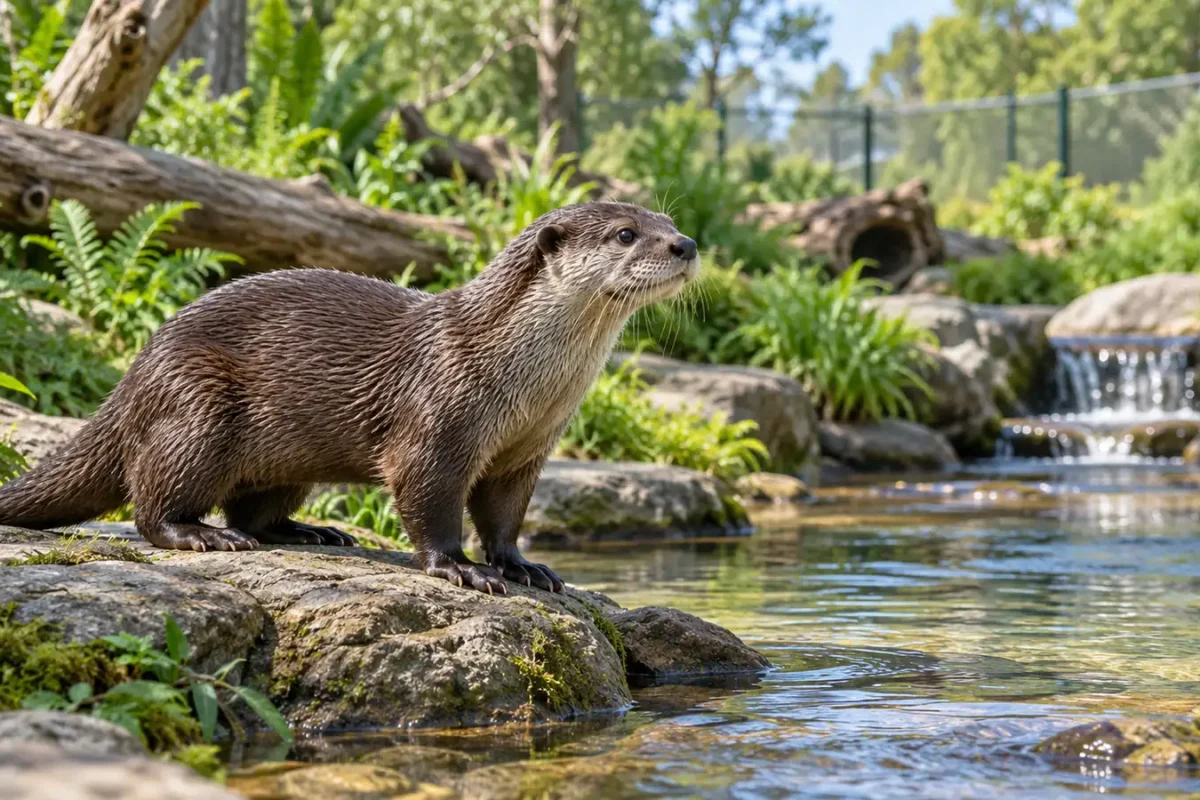
Can you have an otter as a pet? In the United States, the honest answer is usually no—or only under narrow rules that depend on the species, state, county, and purpose. Sea otters are federally protected and are not ordinary private pets. Laws for river otters and nonnative otter species vary, but many states prohibit personal ownership or require wildlife permits that may be limited to qualified exhibitors, researchers, rehabilitators, or other approved facilities.
Even where a particular otter might be legal with paperwork, legality does not make it suitable for a home. Otters are undomesticated, social, scent-marking carnivores with specialized housing, diet, water, enrichment, security, and veterinary needs. A viral video does not show the daily reality.
The Short Answer by Otter Type
| Otter type | Can it be a private pet in the U.S.? | Main issue |
|---|---|---|
| Sea otter | Generally no | Protected by the federal Marine Mammal Protection Act; possession and take are tightly restricted |
| Native North American river otter | Depends on state law, but taking a wild animal home is not a pet pathway | State wildlife, furbearer, rehabilitation, possession, and local rules apply |
| Asian small-clawed otter | Varies by state and locality; international trade is highly restricted | CITES Appendix I plus state captive-wildlife laws and possible federal business rules |
| Any rescued or injured wild otter | No, not without proper wildlife authorization | Contact a licensed wildlife rehabilitator or wildlife agency |
This table is a starting point, not a legal determination. The scientific species name, where the animal came from, how it entered the country, and the owner’s location can all change the answer.
Sea Otters Are Federally Protected
Sea otters are marine mammals. The U.S. Fish and Wildlife Service explains that the Marine Mammal Protection Act places a moratorium on taking and importing marine mammals. “Take” includes actions such as capturing or harassing an animal, and federal exceptions focus on specific activities such as scientific research, public display, conservation, and certain Alaska Native subsistence uses.
That means finding a sea otter, buying one from someone who claims it is tame, or raising an orphan yourself is not a legal pet route. If you see a stranded or distressed sea otter, keep people and pets away and call the responsible wildlife authority. Do not touch, feed, move, or transport it unless an authorized responder instructs you to do so.
What About Asian Small-Clawed Otters?
Most social-media “pet otters” are Asian small-clawed otters, the smallest otter species. Their size can make them look manageable, but their conservation and trade status is serious. In 2019, CITES moved Asian small-clawed and smooth-coated otters to Appendix I, which prohibits commercial international trade in wild-origin specimens and tightly controls other cross-border movement.
CITES status does not create a simple nationwide answer for domestic possession inside the United States. It does mean that an animal’s origin and import documents matter. A seller’s statement that an otter is “captive bred” or “legal in my state” is not enough evidence by itself.
State and Local Laws Decide Much of the Answer
Wildlife ownership rules differ sharply. Some states ban possession for pet purposes. Others classify wildlife by risk and require permits, facility inspections, experience records, import approval, or other documentation. Counties, cities, landlords, and homeowners associations can impose additional restrictions.
Two official examples show why a generic “legal states” list is unreliable:
- California: The California Department of Fish and Wildlife says restricted-species permits are limited to qualified purposes such as research, exhibition, education, or shelter and that permits are not issued to possess wild animals as pets.
- Florida: The Florida Fish and Wildlife Conservation Commission says a license or permit is required to possess, sell, or exhibit wildlife in most cases and regulates native and nonnative mammals through its Captive Wildlife Office. Species classification, import authorization, and intended activity determine the paperwork.
A law allowing possession with a permit is not the same as permission to keep an otter as a household pet. A rehabilitation, propagation, exhibition, or commercial license may authorize only the activity printed on that license.
Does a USDA License Make an Otter Legal?
Not by itself. The USDA Animal and Plant Health Inspection Service licenses or registers certain businesses and activities covered by the Animal Welfare Act, including some dealers and exhibitors. Its licensing page specifically directs AWA-regulated businesses to determine whether they need a license or registration.
A USDA license does not cancel state, local, CITES, Endangered Species Act, or Marine Mammal Protection Act restrictions. It also does not transform a wildlife exhibition or dealer authorization into personal-pet approval. Every applicable layer must allow the exact species, purpose, source, and location.
How to Check the Law Before Contacting a Seller
- Get the scientific species name. “Otter” is not specific enough. Sea otters, North American river otters, and Asian small-clawed otters do not fall under identical rules.
- Contact your state wildlife agency in writing. Ask whether personal possession, importation, purchase, transport, and breeding are allowed for that species at your exact address.
- Check city and county codes. Search for exotic animal, wild animal, dangerous animal, zoning, and nuisance-animal rules.
- Ask which permit applies to a personal pet. Do not assume a zoo, exhibitor, breeder, rehabilitator, or propagator permit covers private companionship.
- Verify federal trade documents. If the species or animal crossed a national border, ask the U.S. Fish and Wildlife Service what records are required.
- Confirm veterinary and housing rules before paying. Written legal permission does not solve the care problem.
Keep written replies and copies of the current rules. Do not rely on a seller’s screenshot, an old blog post, or a list that does not name its government sources and revision date.
Why Otters Do Not Fit Household Life
They are social wild animals
Asian small-clawed otters naturally live in family groups. The Smithsonian’s National Zoo describes groups of up to 15–20 animals and a wide range of vocal communication. Keeping one alone to make handling easier conflicts with its social biology; adding more otters multiplies the space, feeding, sanitation, compatibility, and legal challenges.
Scent marking is normal, not a training failure
Otters communicate chemically. Asian small-clawed otters have scent glands, produce an intense musky odor, and use communal latrine areas. Frequent defecation, spraying, digging, and marking are species-typical behaviors. A litter box and household deodorizer do not change the animal’s natural communication system.
A swimming pool is only one part of the habitat
An otter needs secure water access plus substantial dry land, shelter, varied substrates, digging opportunities, shade, clean drinking water, enrichment, safe social grouping, and barriers designed for a strong, curious escape artist. A bathtub, backyard pool, or indoor pen does not reproduce a professionally managed habitat.
Feeding is specialized and frequent
Otters are carnivores with rapid metabolisms. Smithsonian keepers provide formulated diets, fish, shellfish, insects, and other items as part of a managed nutrition and enrichment program. Substituting grocery-store fish alone can create nutritional problems, and finding a veterinarian qualified to oversee an otter diet may be difficult.
They can bite and damage property
Small does not mean harmless. Otters have strong jaws and teeth adapted to animal prey. They investigate with their mouths and paws, dig, climb, squeeze through openings, manipulate latches, and may defend food or territory. Removing teeth, claws, or scent glands is not a humane substitute for species-appropriate management.
The Pet-Trade Welfare Problem
Cute videos can hide how an animal was obtained and what happened before filming. The Smithsonian warns that illegal capture for the exotic pet trade is a growing threat and states directly that Asian small-clawed otters do not make good pets or thrive outside specialized facilities.
Online sellers may separate pups from adults, misidentify species, reuse permits, or describe wild-caught animals as captive bred. Paying a deposit before checking the legal origin can support trafficking and leave the buyer with an animal that authorities may confiscate.
Red Flags in an Otter Sale
- The seller will not provide the scientific species name.
- The listing says “legal everywhere” or “no permit needed.”
- The seller pressures you to pay before your wildlife agency responds.
- There is no verifiable birth, transfer, import, or parentage record.
- The seller offers shipping without discussing destination permits.
- The animal is marketed as quiet, odor-free, litter-trained, or suitable alone.
- The seller treats a USDA license as proof that ownership is legal in every state.
- The pickup location, business name, and name on the documents do not match.
Walk away when the documentation is incomplete. Do not try to “rescue” an offered animal by buying it; payment rewards the sale and may create another buyer for the next animal.
What If You Find an Injured or Orphaned Otter?
Keep your distance, contain pets, and call your state wildlife agency or a licensed wildlife rehabilitator. Do not feed the otter, place it in a bathtub, or transport it in your car unless an authorized professional gives those instructions. A frightened wild otter can bite, and incorrect food or handling can worsen its condition.
A rehabilitator’s goal is treatment and release, not conversion into a pet. If the animal cannot be released, its placement is a decision for the responsible agencies and qualified facilities.
Better Ways to Enjoy Otters
- Visit an accredited zoo or aquarium with a professionally managed otter habitat.
- Support wetland conservation and reputable otter research.
- Watch wild otters from a distance without feeding or approaching them.
- Choose a domesticated companion animal whose needs fit your home and local rules.
- Volunteer with a licensed wildlife organization after completing its training.
If you enjoy learning about animals without turning wildlife into pets, browse our Pets & Pests guides for practical, responsibly sourced information.
Frequently Asked Questions
What states allow pet otters?
There is no dependable one-line list. Rules can differ by species, permit type, animal origin, county, and intended use, and they can change. Confirm the current answer with the state wildlife agency and local government before contacting a seller.
Can you own a sea otter?
Not as an ordinary private pet. Sea otters are protected marine mammals, and federal permits are limited to specific authorized purposes. Finding or buying one does not create legal ownership.
Can an otter be domesticated?
No. An individual otter may become accustomed to people, but taming one animal is not domestication. Domestication is a population-level process across many generations of selective breeding. Otters retain wild social, scent-marking, feeding, territorial, and escape behaviors.
Are Asian small-clawed otters easier pets because they are small?
No. Their smaller size does not remove their need for social companions, a complex land-and-water habitat, multiple feedings, enrichment, secure containment, specialized veterinary care, and legal documentation.
Does a wildlife permit guarantee I can keep an otter at home?
No. The permit must cover the specific species and activity. Many permits authorize exhibition, research, rehabilitation, or propagation and do not authorize personal pet ownership. Zoning and local animal rules may still apply.
What should I do if someone is selling an otter illegally?
Save the listing URL and seller details without completing the purchase. Report the offer to the relevant state wildlife agency and, when interstate or international trade may be involved, the U.S. Fish and Wildlife Service.
The Practical Answer
For most people in the United States, an otter is neither a lawful nor responsible household pet. Sea otters are federally protected, other species face a patchwork of wildlife laws, and all otters have demanding needs that ordinary homes are not designed to meet. Check official agencies for the legal answer, then choose a way to appreciate otters that does not put the animal, the buyer, or wild populations at risk.
Sources
- U.S. Fish and Wildlife Service: Marine Mammal Protection Act
- CITES: 2019 Appendix Changes for Asian Otters
- USDA APHIS: Animal Welfare Act Licensing and Registration
- California Department of Fish and Wildlife: Living with Wildlife
- Florida Fish and Wildlife Conservation Commission: Captive Wildlife
- Smithsonian’s National Zoo: Asian Small-Clawed Otter
- Smithsonian’s National Zoo: Otters and the Illegal Pet Trade
Leave a Reply