
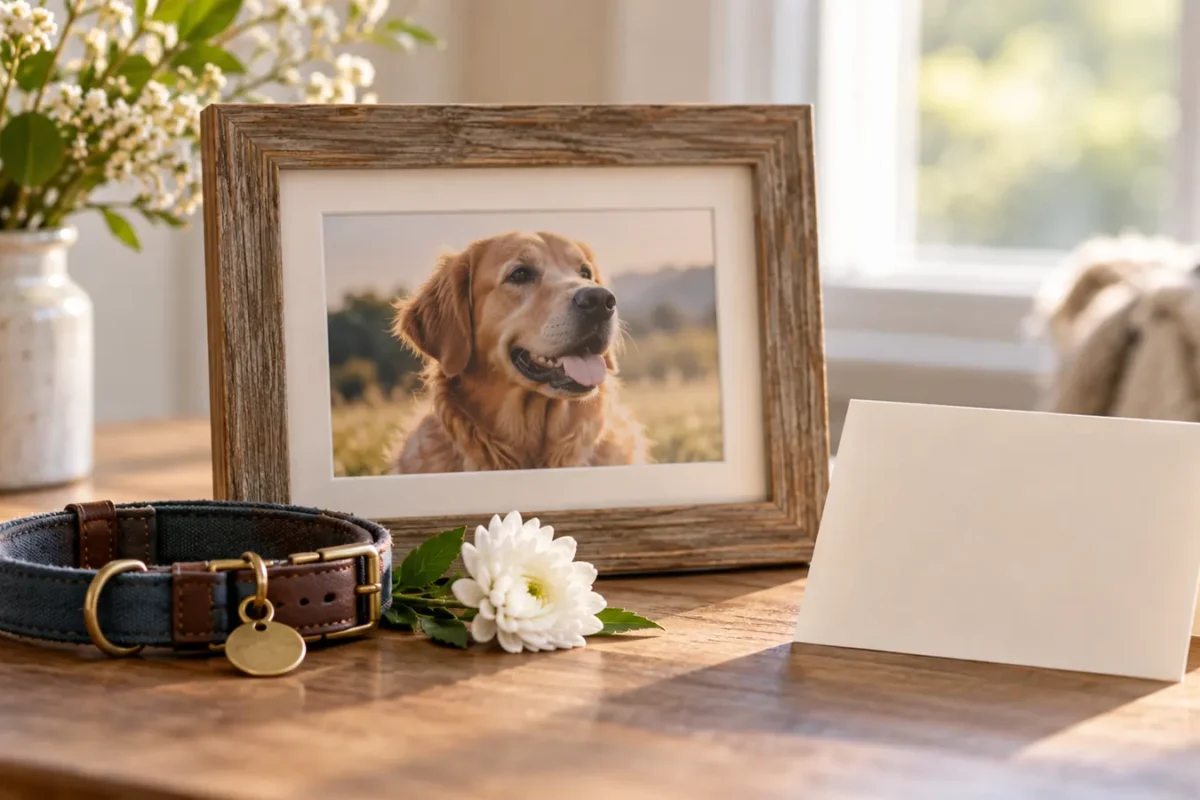
Wondering what to say when someone loses a pet? Keep it simple, name the pet, acknowledge that the loss matters, and offer one specific kind of help. A message such as “I’m so sorry about Luna. She was deeply loved, and I’m thinking of you” is usually more comforting than trying to explain the loss or make the person feel better immediately.
You do not need a perfect sentence. You need a sincere one. The LSU School of Veterinary Medicine recommends listening, sharing memories, checking in, sending condolences, and asking what the grieving person needs. The examples below turn that guidance into words you can use in person, by text, or in a card.
Short Messages You Can Send Right Away
| Situation | Message you can use |
|---|---|
| A simple text | “I’m so sorry about [pet’s name]. I know how much they meant to you.” |
| You knew the pet | “I’ll always remember how [pet’s name] greeted everyone at the door. They were one of a kind.” |
| You did not know the pet well | “I’m so sorry for your loss. From the way you talked about [pet’s name], it was clear they were deeply loved.” |
| The death was sudden | “I’m so sorry. This is such a painful shock. I’m here to listen whenever you want company.” |
| After euthanasia | “I’m so sorry about [pet’s name]. I know how much love went into every decision you made for them.” |
| A coworker lost a pet | “I’m sorry about [pet’s name]. Please don’t worry about replying. I’m thinking of you today.” |
| You want to offer help | “I’d like to leave dinner at your door Tuesday evening. No need to visit or reply.” |
Use these as starting points, then adjust the wording to sound like you. If you know the animal’s name, include it. If you have a warm, specific memory, share it without turning the message into a long story about yourself.
The Best Things to Say After a Pet Dies
1. Acknowledge the loss directly
“I’m so sorry” may feel small, but it does an important job: it recognizes that something painful happened. You do not need to rank the loss or compare it with another death. The American Veterinary Medical Association explains that the bond with a pet is unique and that grief over the loss deserves care rather than dismissal.
Good openings include:
- “I’m so sorry for your loss.”
- “I was heartbroken to hear about Milo.”
- “I know Daisy was part of your family. I’m thinking of you.”
2. Use the pet’s name
Saying the name makes the message personal. It also signals that you see the animal as an individual, not as an interchangeable “pet.” If you are unsure of the spelling, check an old message or social post rather than guessing.
3. Share one specific memory
A short memory can give the person something real to hold onto. Choose a kind detail: the way the cat sat in every open box, the dog’s excitement on walks, or the bird’s favorite sound. Keep the focus on the pet and the relationship.
For example: “I still smile when I think about Charlie carrying that red ball everywhere. He brought so much joy into a room.”
4. Make space instead of trying to fix the grief
LSU advises against trying to solve another person’s feelings or putting a timetable on grief. A better approach is to listen and let the person decide how much they want to say. You can write, “I’m here if you want to talk about her, and I’m also happy to sit with you quietly.”
The Cornell University College of Veterinary Medicine notes that people respond to pet loss differently and that grief does not follow one prescribed schedule. That is why “take all the time you need” is more supportive than “you’ll feel better soon.”
What to Write in a Pet Sympathy Card
A card can be slightly longer than a text, but it still does not need to fill the page. A useful structure is:
- Name the loss: “I was so sorry to hear about Max.”
- Honor the bond: “He was a loyal companion and such an important part of your family.”
- Add a memory or quality: “I will always remember his gentle way with the kids.”
- Close without pressure: “I’m thinking of you and am here whenever you need me.”
Complete card example:
I was so sorry to hear about Max. He was a gentle, funny dog, and it was obvious how safe and loved he felt with you. I’ll always remember him waiting by the kitchen whenever anyone opened a snack. I’m thinking of you and your family.
If you never met the animal, do not invent a memory. Say what you genuinely know: “I never met Poppy, but your stories made it clear how much happiness she brought you.”
What to Say in Difficult Circumstances
When the loss was sudden or traumatic
Avoid asking for details about what happened. LSU specifically cautions that questions about the circumstances can feel intrusive, especially after euthanasia or a distressing death. Acknowledge the shock and leave control with the grieving person: “I’m so sorry this happened so suddenly. You do not have to explain anything, but I’m here if you want to talk.”
When the person feels guilty
Do not investigate the decision or declare that they “did the right thing” unless you know they want reassurance. You can recognize the care behind the relationship without judging the medical decision: “You loved her throughout her life, and that love was clear in every choice you made.”
When a child has lost a pet
Use plain, honest language that matches the child’s age. Avoid saying the pet “went to sleep” or “went away,” which can confuse a child about sleep or whether the animal will return. Cornell recommends welcoming children into the conversation, answering questions honestly, and allowing them to remember the pet through drawings, stories, or shared memories.
You might say: “Buddy died, which means his body stopped working and he cannot come back. It is okay to feel sad and to talk about him whenever you want.” The child’s parent or caregiver should lead any explanation about spiritual beliefs.
What Not to Say—and What to Say Instead
| Avoid | Why it can hurt | Try this instead |
|---|---|---|
| “It was just a pet.” | It dismisses the relationship. | “I know how important [name] was to you.” |
| “You can get another one.” | It treats the animal as replaceable. | “[Name] had a place in your life that was completely their own.” |
| “At least they lived a long life.” | It asks the person to minimize present pain. | “I’m grateful I got to know [name], and I’m so sorry they’re gone.” |
| “Everything happens for a reason.” | It imposes an explanation or belief. | “This is painful, and I’m here with you.” |
| “I know exactly how you feel.” | Every relationship and loss is different. | “I can’t know exactly what this is like for you, but I’m ready to listen.” |
| “Are you still upset?” | It puts a deadline on grief. | “I’ve been thinking about you. How are you doing today?” |
Also be careful with “They’re in a better place.” LSU notes that beliefs about death and the afterlife differ. Use spiritual language only when you know it fits the person’s beliefs.
How to Offer Help That Is Easy to Accept
“Let me know if you need anything” is kind, but it makes a grieving person choose a task and ask for it. A specific, low-pressure offer is easier to accept or decline:
- “Can I leave dinner at your door on Tuesday?”
- “I can take your usual Saturday errand if that would help.”
- “Would you like me to print a few favorite photos for a memory box?”
- “I can tell the rest of the team so you do not have to repeat the news.”
- “Would you like company, or would quiet time feel better today?”
Respect the answer. A declined offer does not mean your support was unwelcome. It may simply mean the person needs something different.
Follow Up After the First Message
Support often arrives immediately and then becomes quiet. LSU recommends checking in regularly. Send a brief message a week or two later without demanding a response: “I was thinking about you and Luna today. No need to reply.”
You can also remember a meaningful date, such as the pet’s adoption day, or share a photo later if you know it will be welcome. Avoid turning every check-in into a question about whether the person is “over it.”
Frequently Asked Questions
What is the best short condolence message for the loss of a pet?
“I’m so sorry about [pet’s name]. They were deeply loved, and I’m thinking of you” is short, personal, and does not pressure the person to respond.
Should I send a text or call?
Use the form of communication you normally use with that person. A text is often helpful because they can read it when ready. If you are close, you can add, “I can call tonight if you want to talk.” Do not repeatedly call if they have not answered.
Is it okay to send flowers or a pet-loss gift?
Yes, if it suits the person. A handwritten card, meal, printed photo, small memorial plant, or donation to an animal organization can be meaningful. The gesture matters more than the price.
What if I say the wrong thing?
Correct it simply: “I’m sorry—that came out wrong. I care about you, and I’m here to listen.” A sincere repair is better than avoiding the person because you feel awkward.
How long should I keep checking in?
There is no standard grief timeline. A brief follow-up after the first few days, another in the following weeks, and occasional messages on meaningful dates can help. Let the person’s responses guide how often you reach out.
The Simple Rule
When someone loses a pet, acknowledge the loss, say the animal’s name, share a true memory if you have one, and offer practical support without pressure. You cannot remove the grief, but you can make sure the person does not have to carry it unseen.


Leave a Reply