
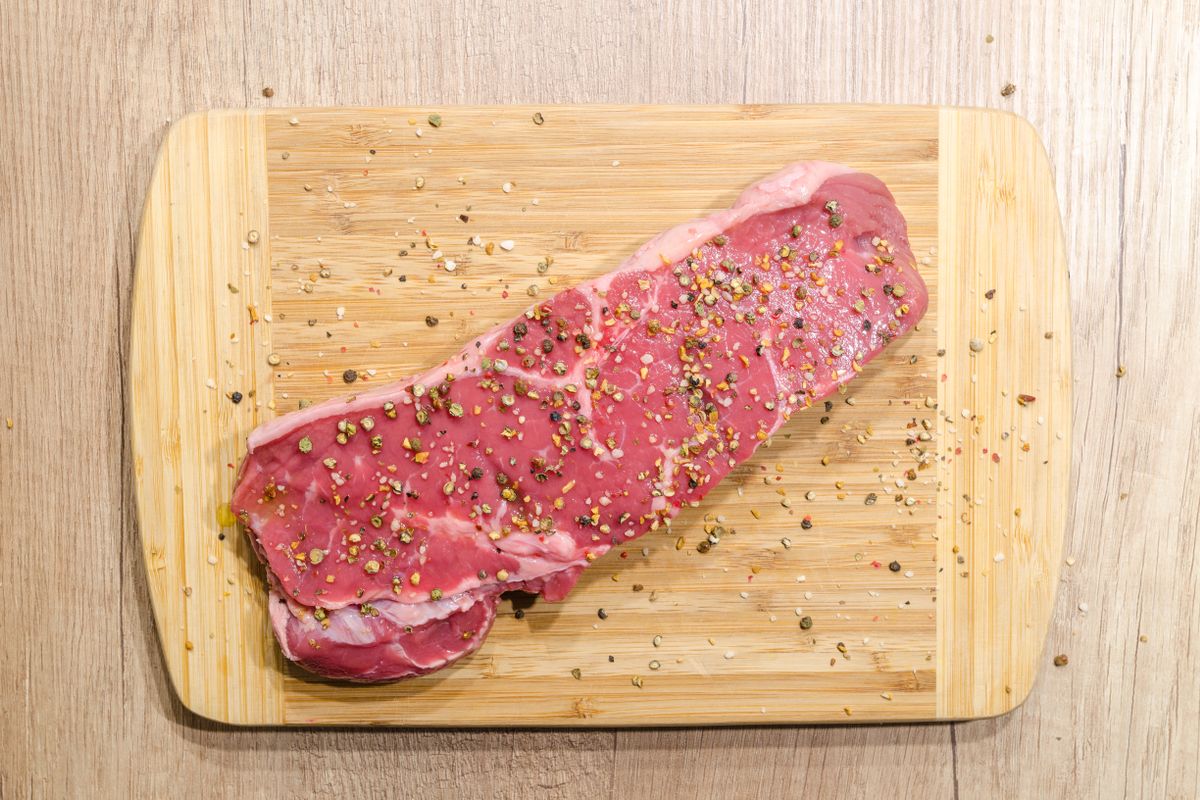
How to tell if beef is bad starts with its storage history and smell or texture—not color alone. Fresh beef may look purple in vacuum packaging, turn bright red after exposure to air, or darken to brown from oxidation during refrigeration. USDA says brown beef that also has an off odor and feels tacky after extended storage should not be used. If you are unsure how long it was warm or refrigerated, discard it instead of tasting it.
Quick answer: Throw beef away if it has an unpleasant sour or rotten odor, a sticky or slimy surface, visible spoilage, or unsafe time-temperature history. Color changes by themselves do not reliably prove that beef is spoiled. Keep raw beef at 40°F (4°C) or below and follow the USDA storage window for its cut.
How to Tell If Beef Is Bad: Signs to Check
Off or sour smell
Raw beef can have a mild, ordinary meat smell, but a strong sour, rancid, rotten, or otherwise unpleasant odor is a reason to discard it. Do not rinse the meat to remove the smell, and do not cook it to “make it safe.” A bad odor is a spoilage warning, not a test that can tell you which bacteria are present.
Sticky, tacky, or slimy texture
A surface that feels unusually tacky or slimy can indicate spoilage, especially when it appears with an off odor or a long storage time. Handle the package as raw meat: avoid spreading juices to counters, utensils, or ready-to-eat foods, then wash your hands and clean surfaces.
Mold or leaking, damaged packaging
Visible mold on fresh beef, a leaking package, or packaging that has lost its seal is a reason to discard the meat. Keep raw meat in a leakproof container on a low refrigerator shelf so juices cannot drip onto other foods. Do not cut away a suspicious patch and use the rest.
Does brown or gray beef mean it has gone bad?
Not necessarily. USDA explains that beef sealed away from oxygen can look burgundy or purple. After air reaches the surface, it can turn cherry red. During refrigerated storage, beef may also become brown through oxidation. Color is one clue, but it cannot confirm that beef is safe or spoiled on its own.
USDA advises against using beef that has turned brown during extended storage when it also has an off odor and feels tacky. In other words, use the storage history and other spoilage signs together. If the color is unusual and you cannot confirm the package stayed cold and within the recommended time, the safest choice is to throw it away.
How long beef keeps in the refrigerator
USDA recommends storing beef promptly in a refrigerator set at 40°F (4°C) or below. Use or freeze raw steaks, chops, and roasts within 3 to 5 days. Use or freeze raw ground beef within 1 to 2 days. Cooked beef leftovers generally keep 3 to 4 days when refrigerated promptly. These are storage guidelines, not guarantees that meat remains safe if it was mishandled.
For steak-specific handling and timing, see our guide to how long steak can stay in the fridge. If you do not plan to use beef within the recommended refrigerator window, freeze it. Keep the refrigerator at or below 40°F and use an appliance thermometer if you are not sure about its temperature.
What if beef sat out?
FoodSafety.gov says perishable food should not remain unrefrigerated for more than 2 hours, or more than 1 hour when the surrounding temperature is above 90°F (32°C). If raw or cooked beef has been out longer, discard it even if it still looks and smells normal. Smell and appearance cannot reveal every harmful germ.
How to check a package of beef
- Check the timeline. When did you buy or thaw it? Has it been refrigerated continuously? Compare the date opened or purchased with the storage window for the type of beef.
- Check the refrigerator temperature. It should be 40°F or below. If the fridge was warm or power was out, follow official food-safety guidance rather than relying on the meat’s appearance.
- Look at the package and surface. Note leaks, broken seals, visible mold, or a sticky/slimy feel. Do not confuse normal purple or brown color with proof of spoilage.
- Smell only briefly and do not taste. If the odor is unpleasant, discard it. Never taste raw beef to decide whether it is safe.
- When in doubt, throw it out. The cost of replacing questionable beef is smaller than the risk of eating food with an uncertain history.
Keep beef fresh and prevent cross-contamination
- Refrigerate beef as soon as you get home; keep the refrigerator at 40°F or colder.
- Store raw beef in a sealed, leakproof container on a low shelf.
- Keep raw meat separate from ready-to-eat foods and use separate plates and utensils.
- Wash hands, knives, boards, and counters after they contact raw meat or juices.
- Freeze beef you will not use within the recommended refrigerator window. Thaw it in the refrigerator, cold water, or microwave—not on the counter.
- Cook beef to the safe internal temperature for its form and check with a food thermometer; color is not a reliable doneness test.
Frequently asked questions
Can beef be bad if it does not smell?
Yes. Harmful bacteria may not change the food’s smell, color, or texture. Follow storage and time-temperature guidance even when beef looks normal.
Can I eat beef that turned brown in the fridge?
Brown color can result from oxidation and is not automatically spoilage. But if it also has an off odor or tacky/slimy texture, or has exceeded safe storage guidance, discard it.
Should I rinse beef that smells strange?
No. Rinsing does not make spoiled meat safe and can spread raw juices around the sink and kitchen. Discard beef with an off odor.
Leave a Reply